Saturday, September 02, 2006

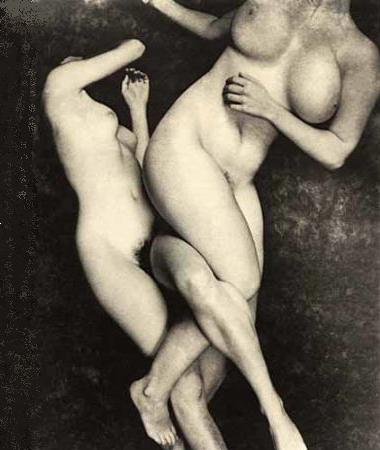
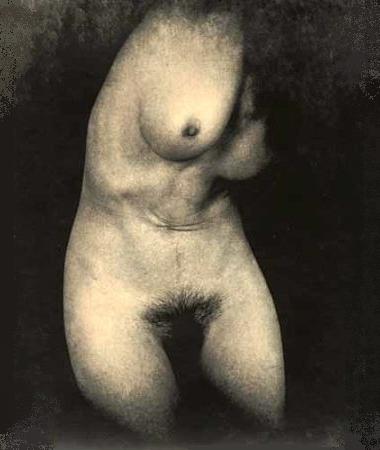
Three photos by Robert Asman

"Entwined" (1987), Toned gelatin silver print from manipulated paper negative
"Primitive Dance", 2004, gelatin silver print, chemically altered, 15 1/2" x 19 1/2"

Robert Asman is a craftsman, educator, and artist. He has taught at Drexel University, University of the Arts, and presently teaches at the University of Pennsylvania. As an artist he received a BA from Catholic University and an MFA from Rochester Institute of Technology. He is and has been actively engaged in making and exhibiting his works in galleries and museums around the world, but primarily in Philadelphia where he maintains his residence and studio.

Friday, September 01, 2006

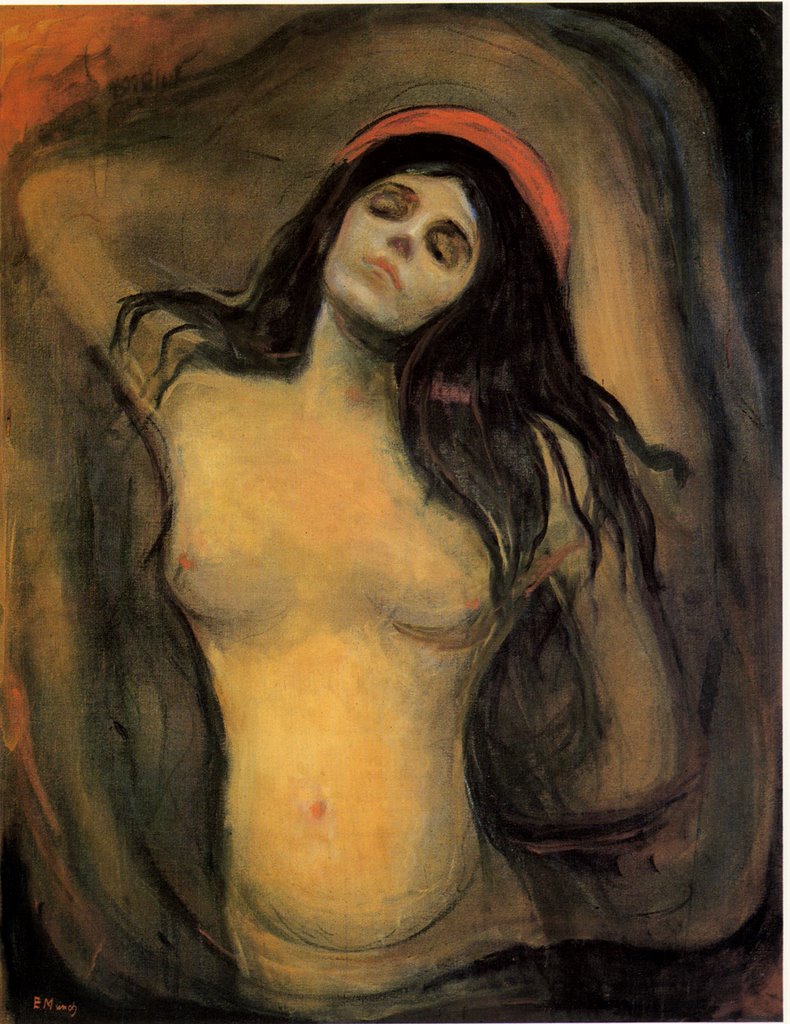
"Madonna" (1894-1895) by Edvard Munch

The title "Madonna" suggests a depiction of Mary, the mother of Jesus, although it is a highly unusual representation of Mary, who until the 20th century was usually represented in high art as a chaste, mature woman. The figure in this painting appears to be young, perhaps a teenager, and is sensualized, if not eroticized, by her twisting, expressive pose. She stretches her arms behind herself and arches her back, increasing the viewer's consciousness of her physical body. Yet even in this unusual pose, she embodies some of the key elements of canonical representations of the Virgin: she has a quietness and a calm confidence about her. Her eyes are closed, expressing modesty, but she is simultaneously lit from above; her body is seen, in fact, twisting toward the light so as to catch more of it, even while she does not face it with her eyes. These elements suggest aspects of conventional representations of the Annunciation. (source)

From today's news:

Two years after the Edvard Munch masterpieces The Scream and Madonna were stolen from the Munch Museum, Oslo Police recovered the two masterpieces in a bold daylight raid, according to the authorities. The works are in a much better than expected condition, announced the police in a press conference. Police stated that they think the works were in Norway all the time, although they did not reveal where they found the works. According to Iver Stensrud, head of the Oslo Police District's organized crime division, no ransom nor reward was paid.

The works were stolen from the Munch Museum on August 22, 2004. So far, no arrests have been made. "The Scream" is valued at around $81 million and "Madonna" at $100 million.

Gro Balas, director of culture for the city of Oslo, said, "I am, on behalf of Oslo's entire population, both relieved and happy." She later said the paintings are owned "by everyone," and that "the whole world has an option on these paintings."

Ingebjørg Ydstie, acting leader of the Munch Museum in Oslo, stated "I feel a great sense of joy on behalf of the museum and a whole world of art lovers. This is a big day."

Buy this book at Amazon.com

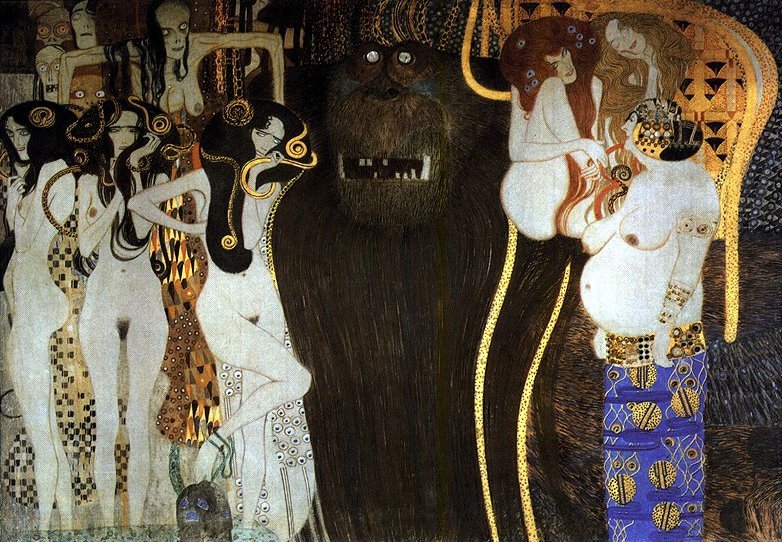
"Beethoven Frieze" (1902) by Gustav Klimt

Gustav Klimt (1862–1918) was an Austrian Symbolist painter and one of the most prominent members of the Vienna Art Nouveau movement. His major works include paintings, murals, sketches and other art objects, many of which are on display in the Vienna Secession gallery. Klimt's primary subject is the female body, and his works are marked by a frank eroticism. (source)

Thursday, August 31, 2006

Two works by Marina Abramović


Marina Abramović, Balkan Erotic Epic (detail) (2005), video projection

Marina Abramović (born 30 November 1946, in Belgrade, Yugoslavia) is a performance artist who began her career in the early 1970s. Active for over three decades, she has recently begun to describe herself as the “grandmother of performance art.” This assertion has been neither disputed nor challenged. Abramović's work explores the relationship between performer and audience, the limits of the body, and the possibilities of the mind. (source)

In her latest work, Balkan Erotic Epic, Abramovic creates new, surprising perspectives on archaic rituals that used erotic powers to influence fate and fortune. These powerful images talk to us about the disavowal of ancient practices, and about something buried deep in our consciousness.

Two paintings by Barend van Hoek


Barend van Hoek, details unknown.

Barend van Hoek (1969, The Netherlands) studied at the Kunstacademie in Den Bosch. He makes large paintings drawings on canvas and paper that feature a distinctive cartoonlike distortion. He's represented by this and this gallery.

Wednesday, August 30, 2006

Work by Juan Davila (update)

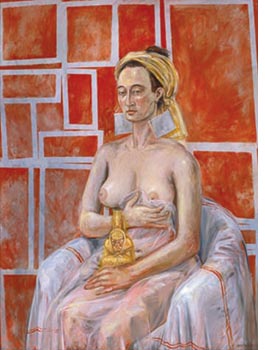
Juan Davila, “Guacolda del Carmen Gallardo” (2004), oil on canvas, 120 x 90 cm, Courtesy of the artist, © the artist

Reference photography by Richard Francis for Chilean artist Juan Davila (pictured at right), including Spiderwoman (left) and a series of paintings relating to Australian bushranger Ned Kelly (centre).

Juan Davila is one of the most innovative and influential painters to have worked in Australia over the past thirty years. Arriving in Australia from Chile in 1974, his consistent interrogation of cultural, sexual and social identities has resulted in a rich, complex and provocative body of work. A firm believer in the political role of the artist, Davila’s paintings have critiqued directly the Australian political system, the cultural aspects of late capitalism, the structures of the art world and the hegemony of Western art history, the representation of sexuality, and more recently, the treatment of refugees in Australian detention centres. (source)

Here's a somewhat different perspective from "The worst art show ever" by Richard Dorment ("Richard Dorment searches desperately for signs of artistic talent at the 12th 'Documenta' show in Kassel, Germany"):

And that brings me to the question of taste. I couldn't believe my eyes when I saw how many works there are on show by the Chilean-born Australian painter Juan Davila, an artist whose high-camp imagery is best characterised as pornographic folk art. His heavy-handed satire is what you'd expect in the work of a political cartoonist, only Davila is a crude draughtsman, uses a paintbrush as though it were a sledgehammer, and isn't remotely funny. Until this show, I didn't think it possible that his work could receive attention outside Australia. (source)

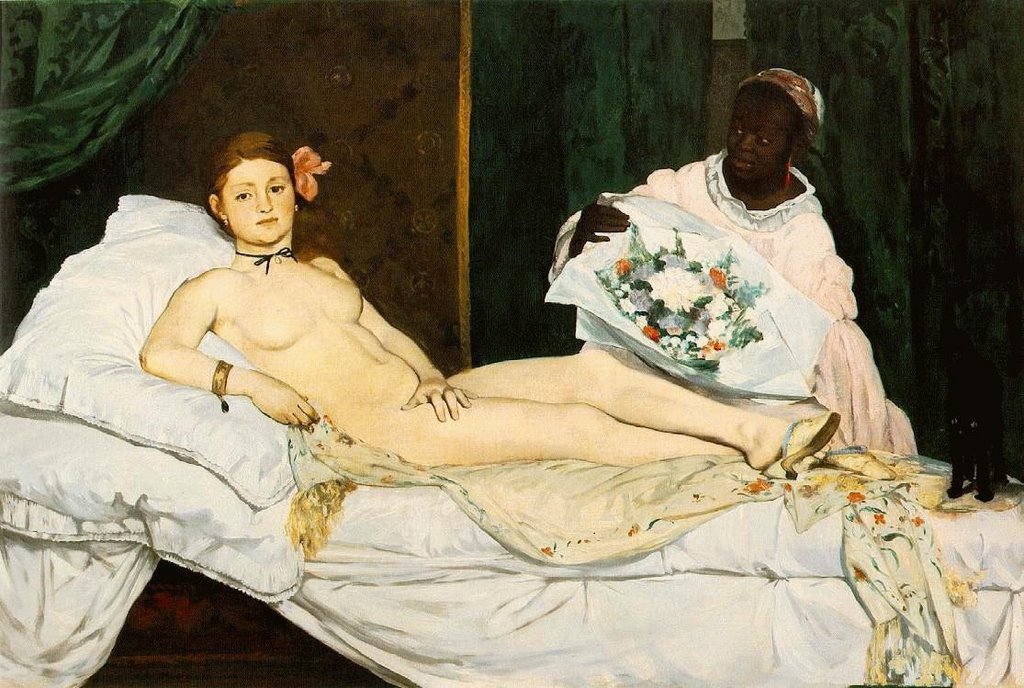
"Olympia" (1863) by Édouard Manet

With Olympia, Manet reworked the traditional theme of the female nude, using a strong, uncompromising technique. Both the subject matter and its depiction explain the scandal caused by this painting at the 1865 Salon. Even though Manet quoted numerous formal and iconographic references, such as Titian's Venus of Urbino, Goya's Maja desnuda, and the theme of the odalisque with her black slave, already handled by Ingres among others, the picture portrays the cold and prosaic reality of a truly contemporary subject. Venus has become a prostitute, challenging the viewer with her calculating look. This profanation of the idealized nude, the very foundation of academic tradition, provoked a violent reaction. Critics attacked the "yellow-bellied odalisque" whose modernity was nevertheless defended by a small group of Manet's contemporaries with Zola at their head. (source)

All posts on Manet.

Buy this book at Amazon.com Buy this book at Amazon.com

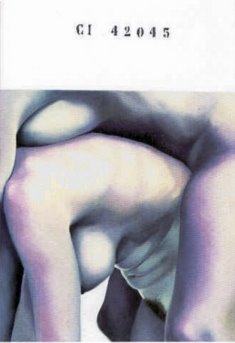
"CI 42045" (2000) by Marta Dell'Angelo

Marta Dell'Angelo was born in 1970 in Pavia, Italy. In July 2000 her first personal exhibition was held at la Tartaruga di Plinio De Martiis Gallery. In 2002, she won (along with Sara Rossi, Matteo Basilè and Chiara) the first edition of Premio New York sponsored by the Italian Ministry of Foreign Affairs and The Italian Academy at Columbia University; in the same year she showed at Assab One, curated by Roberto Pinto and Laura Garbarino in Milano, at Solitudes at Michel Rein Gallery in Paris and at the Le Case d'Arte di Pasquale Leccese Gallery in Milano where she presented her work Classe III H. (source)

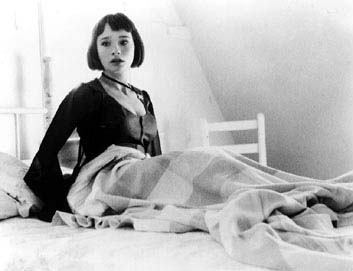
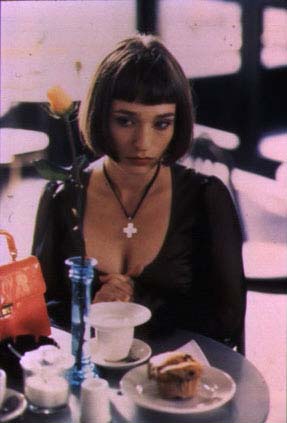
Actress Elina Löwensohn (1966)

Elina Löwensohn in Amateur (1994) by Hal Hartley

Explore the Works of Elina Löwensohn at amazon.com.

Buy this DVD at Amazon.com

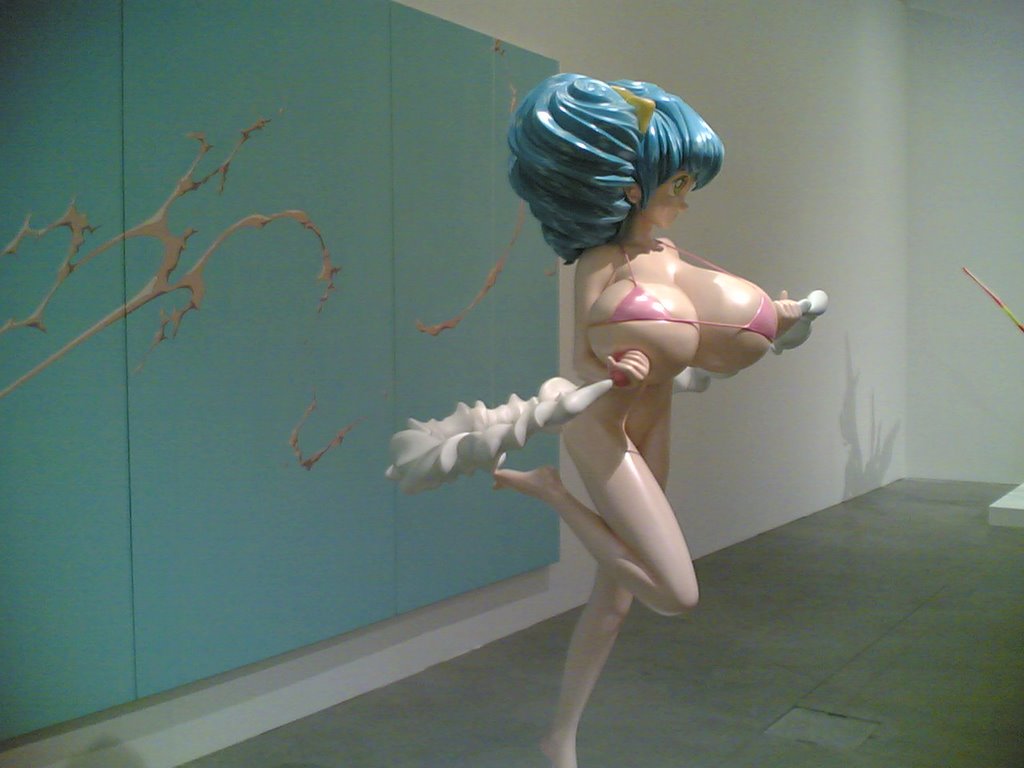
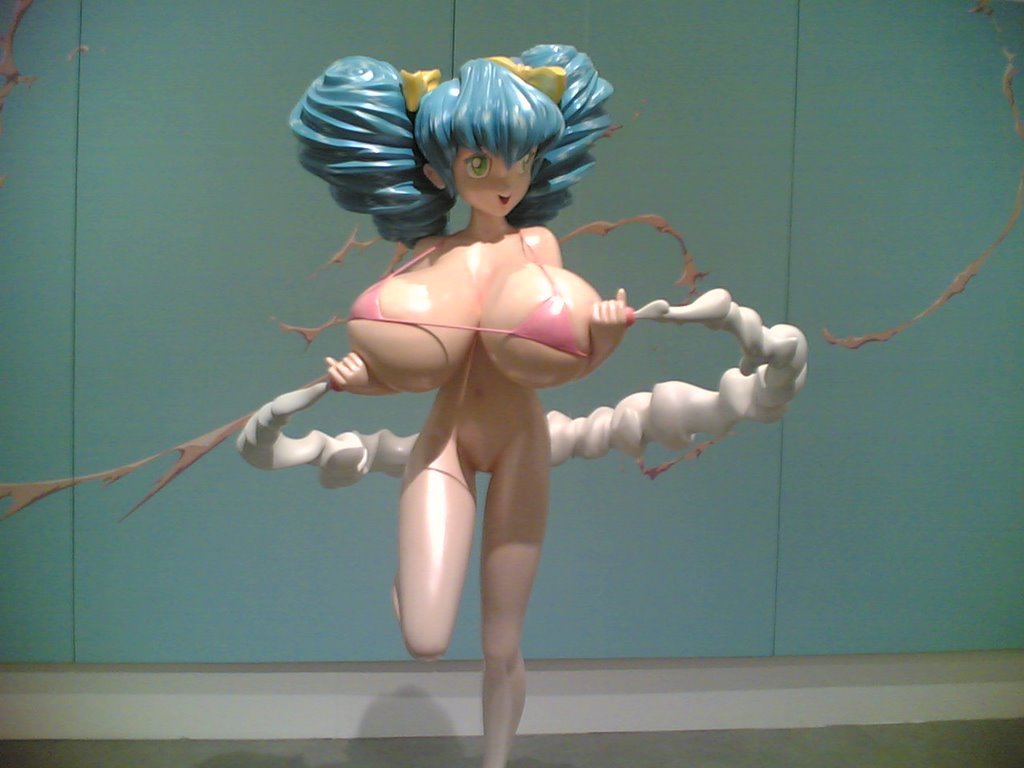
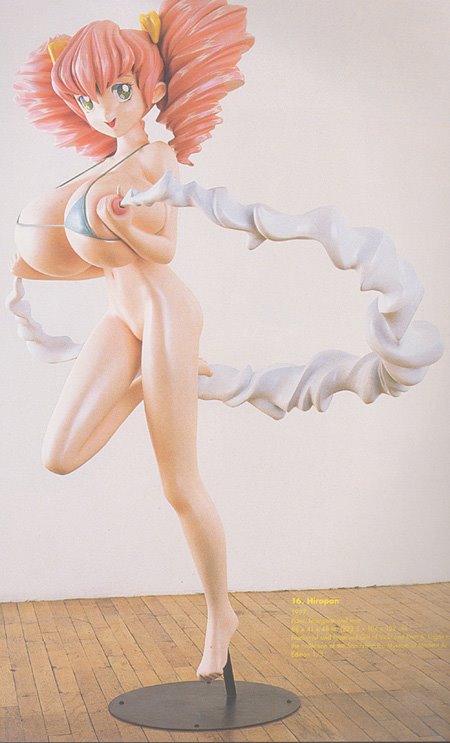
"Hiropon" (1997) by Takashi Murakami (updated)

"Nothing superflat about Hiropon (1997), a green-haired babe skipping a rope formed from milk squirting out of her enormous breasts." (source)

Takashi Murakamimi, Hiropon (1997)

Takashi Murakami is often associated with and draws on manga and otaku, the ultrasophisticated Japanese subcultures of animation, comics, and technology. His work brings together such diverse elements as plastic models, cartoons, advertising balloons, Pop Art, and Conceptual Art strategies. Murakami uses this mass-media imagery and the charms of media communication to highlight the specificity and the contradictions of Japanese culture, particularly in its encounters with the West. For instance, his creation of the unique cartoon character DOB, based in part on Mickey Mouse and the Japanese cartoon character Astro Boy, comments on the "Disneyfication" of society and how the cuteness of a product is one way to guarantee its success. Murakami's Hiropon (1997) and My Lonesome Cowboy (1998) are figurative life-size cartoon sculptures that celebrate sexual-spirituality. Art critic Dave Hickey, writing for Artforum in December 1998, compared the baroque extravagance of My Lonesome Cowboy to Gian Lorenzo Bernini's Ecstasy of Saint Theresa. Murakami uses popular iconography to challenge and update traditional Japanese and Western art as he explores three-dimensional representation. His work was included in the 1999 Carnegie International. (source)

Featured comment by Emilio Sustierras :

Of course, make no mistake about the title, which is a brand name of methamphetamine developed in 1941 and commonly used by soldiers and, allegedly, the tokkôtai suicide bombers in WW2.

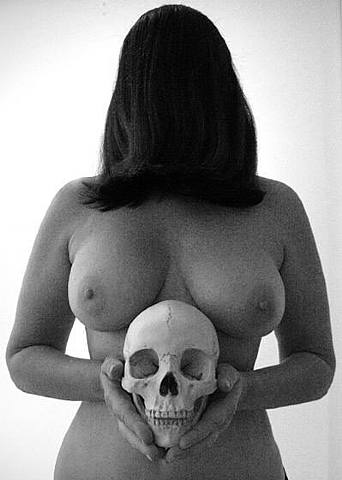
First two photos found here.