Wednesday, September 27, 2006

Nude sculpture under attack!

Edward Winkleman reports that "in Frisco Texas, Sydney McGee, a 28-year veteran art teacher, has been pushed out of the school system because one of the 89 fifth-graders she took on a field trip to the Dallas Museum of Art (at the principal's urging, mind you) saw a nude statue while there and complained to his/her parents."

"But seriously, for the parent who signed off on the field trip (and, one assumes, without having researched the collection before doing so) to then complain to the school is virtually criminal. And even as I write that (trying very hard to give all due respect to parents' rights), I'm thinking if a parent truly objects to having their 10-year old view a statue of a naked person in the context of an art museum then the system has failed that parent as well as that child."

Tuesday, September 26, 2006

"Seven up Sally" (2006) by Mel Ramos

Mel Ramos exhibition at Galerie Ernst Hilger in Vienna, Austria opens 5 October 2006.

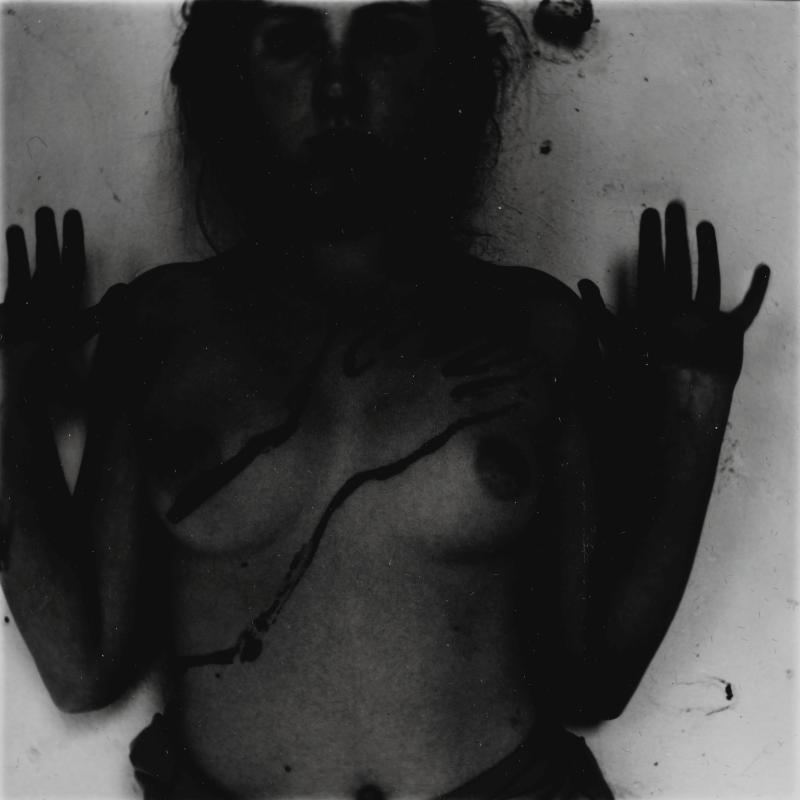
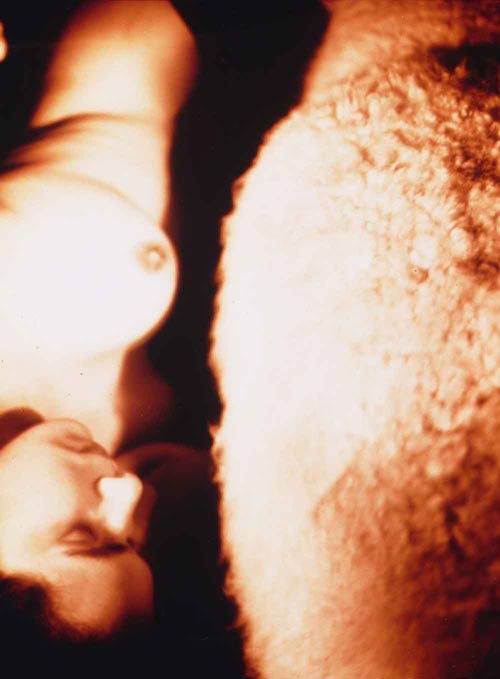
"Self-portrait, Providence, Rhode Island (Painted arm)" (1975-76) by Francesca Woodman

This photo by Francesca Woodman will also be auctioned at Sotheby's in New York in the Photographs Auction, Session 2 on 17 October 2006. This one's estimated at 7,000—10,000 USD. (Update: sold for 12,000 USD)

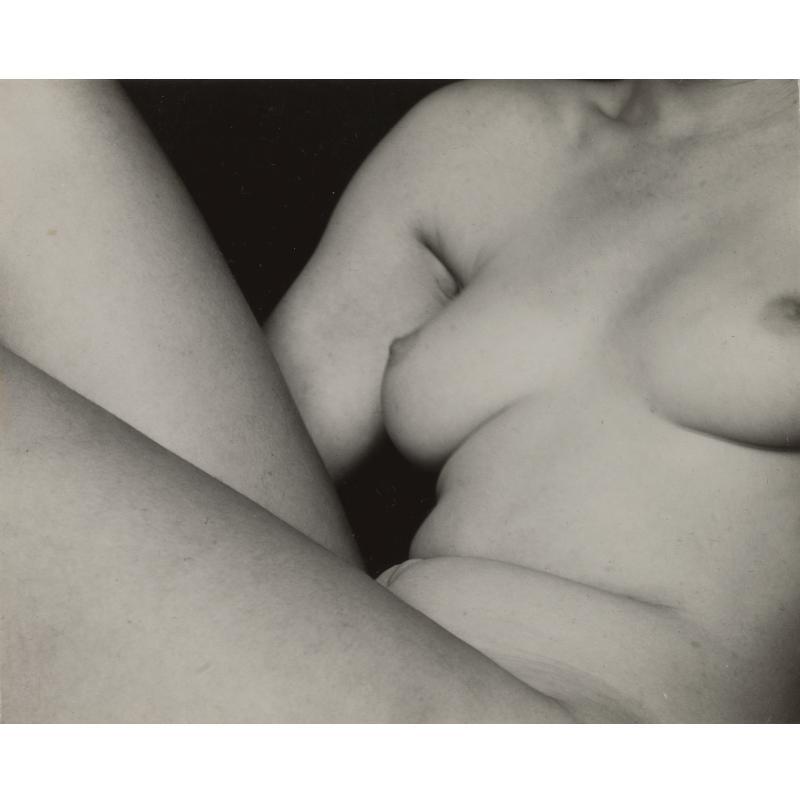
"Virginia (nude)" (1933) by Edward Weston

This photo by Edward Weston will auctioned at Sotheby's in New York in the Photographs Auction, Session 2 on 17 October 2006. It's estimated at 12,000—18,000 USD. (Update: sold for 18,000 USD)

From the catalogue:

According to Amy Conger, 'There is no conclusive information about the identity of Virginia. She seems to have modeled for Edward on one occasion, and that was apparently in July 1933. She was tall with angular hips, heavy breasts, and dark hair. Although full-figured, she seems to have been involved with dance' (Conger, fig. 751).

Wednesday, September 20, 2006

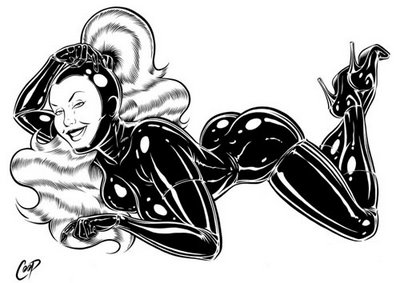
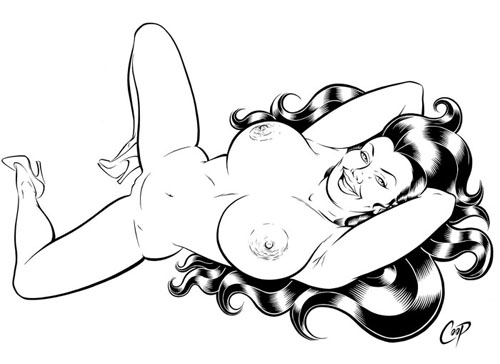
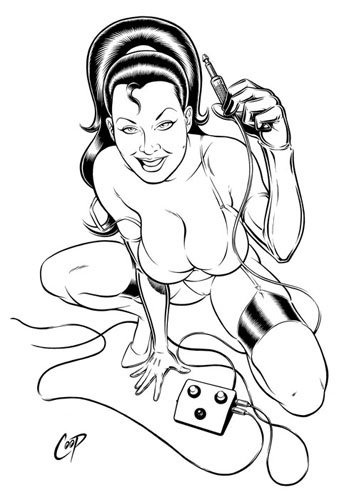
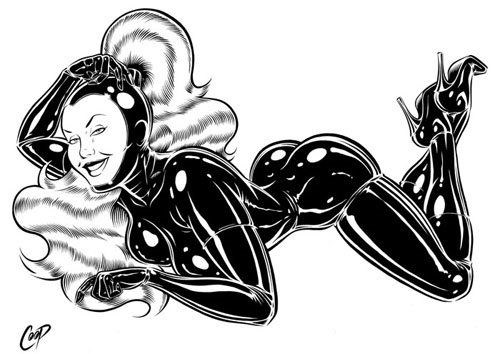
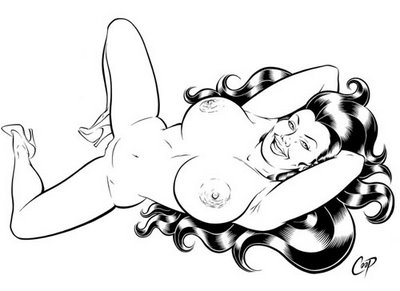
"Nude", "Rubber Catsuit" and "Distortion Pedal" (2005-2006) by Coop

Rubber Catsuit (study for Goodyear), 2006
Ink on paper
24 x 19 in. / 26 x 21 in. framed
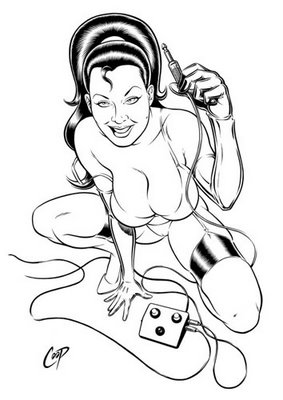
Distortion Pedal, 2006
Ink on paper
19 x 24 in. / 21 x 26 in. framed

In his third solo exhibition at sixspace in Culver City, CA, USA, Coop presents new acrylic-on-canvas paintings and ink-on-paper works in Brand Recognition. Continuing his exploration of re-appropriation, Coop expands on dissecting his own iconic imagery, popular culture, and art historical references with his new series of bold, sexy, and smart paintings. Concurrent with main exhibition, the gallery's project room space will feature the debut showing of his preparatory sketches.

Brand Recognition deals with the prevalence of corporate logos in contemporary society and how they have integrated seamlessly into our culture. Being both fascinated and repelled by the ubiquity of these logos, Coop addresses how they have moved passed being simple eye-catching advertisements and how they have become a part of how we self-identify in society. Combining these easily recognizable corporate images with his own popular brand, Coop touches upon the duality of himself becoming complicit in the very subject that he often finds so troubling.

Coop came out to Los Angeles from Bixby, Oklahoma in the late 1980s and quickly became regarded as one of the preeminent underground artists of his time - his iconic imagery of devil girls, smoking devil, and cars has solidified his place in pop-culture history. Exhibitions of his work have been held in galleries and museums in Los Angeles, London, New York, Chicago, and Zurich, Switzerland. His most recent solo exhibition, Parts with Appeal at sixspace in 2004, contained an ambitious continuous 78-foot multi-panel painting depicting fragmented and re-constructed images of the iconic figures he has created. Publications featuring Coop's work have included Artweek, Juxtapoz, Paper Magazine, Playboy, The Los Angeles Alternative Press, and Rodders Journal. 2001 saw the publication of his first book - "Devil's Advocate: the Art of Coop" - and his popular sketchbook "The Big Fat One" was released in 2004.

See all posts on Coop.

Monday, September 18, 2006

"A Young Girl Defending Herself against Eros" (1880) by Adolphe William Bouguereau

A young nude woman sits with her arms outstretched, pushing away a winged boy. He is Cupid, the god of love, holding up an arrow to pierce her. The title suggests that the young woman is trying to defend herself, yet she smiles and struggles unconvincingly against the mischievous little god.

Visitors to the Paris exhibitions of the 1870s and 1880s loved Adolphe Bougereau's paintings. The Getty Museum's painting repeats a larger composition that Bougereau made for the Paris Salon in 1880; a viewer probably saw the larger version there and requested a smaller one for private viewing.

Bougereau placed his mythological fantasy in an idyllic, Arcadia-like landscape. In fact, he made this composition in his studio, copying the landscape from the neighboring French countryside and using one of his favorite models.

(source)

"Pet Thang" (1991) by Tracey Moffatt

"Pet Thang #4" (1991) by Tracey Moffatt, #4 from a series of 6 images, photograph, 110 × 71cm, Edition of 30

Tracey Moffatt (1960) is an Australian artist who primarily uses photography and video. Her work is held in various international private and public collections including MOMA (NYC), Tate Modern (London) and Museum of Contemporary Art (Los Angeles).

Tracey Moffatt first came to prominence in the Australian art world with her series Something More. First exhibited at the Australian Centre for Photography in 1989, the series set the tone and themes of much of her latter work. In a sequence of nine images, Something More is a loose narrative in which the artist puns on the possible meanings of the title and its veiled references to sadomasochism.

Moffatt's photographic series of works such as Pet Thang [1991] and Laudanum [1998] returned to the themes of Something More exploring mixed and sometimes obscure references to issues of sexuality, history, representation and race. Other series of images, notably Scarred for Life [1994] and Scarred for Life II [1999] again tackled these themes but which took the form of book or magazine illustrations with captions offering ironic and humorous commentaries on the images.

(sources: text | photos)

Thursday, September 14, 2006

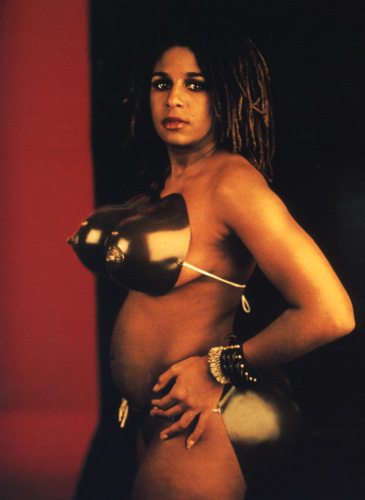
"Venus Hottentot 2000" (1995) by Lyle Ashton Harris

For the exhibition Mirage: Enigmas of Race, Difference and Desire (1995), Lyle Ashton Harris in collaboration with Renee Valerie Cox created the photograph, "Venus Hottentot 2000." In this futuristic reinterpretation of the Hottentot Venus, Renee Valerie Cox directly inserts her own body into the historical matrix of Western representations that configured black female sexuality. In the photograph Cox's body is transformed, recalling the Hottentot Venus, with the addition of protruding metallic breasts and an accompanying metal butt extension. The white strings that delicately hold these metallic body parts in place with bow, seem to emphasize the artists' complex and ambivalent relationships to representations of black female sexuality. Cox wears the metallic appendages like a costume or disguise, but her own nude body is simultaneously revealed to the viewer. She stands in profile emphasizing her bodily dimensions, hands akimbo, and stares directly at the viewer.

Quote from Harris:

This reclaiming of the image of the Hottentot Venus is a way of exploring my own psychic identification with the image at the level of spectacle. I am playing with what it means to be an African diasporic artist producing and selling work in a culture that is by and large narcissistically mired in the debasement and objectification of blackness. And yet, I see my work less as a didactic critique and more as an interrogation of the ambivalence around the body.

source

Buy this book at Amazon.com

Wednesday, September 13, 2006

"Untitled (Girlfriend)" (2000) by Richard Prince

"Untitled (Girlfriend)" (2000) by Richard Prince, Ektacolor photograph, 40x60 inches

You're excused if you think these are photocopied magazine photos, but please keep in mind that one of Richard Prince's images, "Untitled (Cowboy)", a re-photograph, constructed from cigarette advertisements, was the first "photograph" to raise more than $1 m at auction when sold at Christie's New York in 2005.

Here's what Prince writes about the series these two photos are from at richardprinceart.com:

Practicing Without A License 1977

Rephotography is a technique for stealing (pirating) already existing images, simulating rather than copying them, "managing" rather than quoting them–re-producing their effect and look as naturally as they had been produced when they first appeared. A resemblance more than a reproduction, a rephotograph is essentially an appropriation of what's already real about an existing image and an attempt to add on or additionalize this reality onto something more real, a virtuoso real–a reality that has the chances of looking real, but a reality that doesn't have any chances of being real.

The technique is a physical activity which locates an individual behind a camera, a place from which the individual can view nothing but the collected image, a place that affords the opportunity to view exactly how the audience will eventually see the image as an object and a location from which it is possible for an individual to identify him or herself as much as an audience as an author.

Appropriation 1978

I think appropriation has to do with the inability of the author/artist to like his or her own work. Especially if the work is all theirs. I think it's a lot more satisfying to appropriate, especially if you are attempting to produce work with a certain believability, an official fiction let's say. If you take someone else's work and call it your own, you don't have to ask an audience "to take my word for it". It's not like it started with you and ended up being guessed at. The effect you want to produce is not that different from what an audience sometimes experiences when viewing a good movie. And what's that?

What Cristian Metz called, "a general lowering of wakefulness".

More tits are to be seen in his parties series.

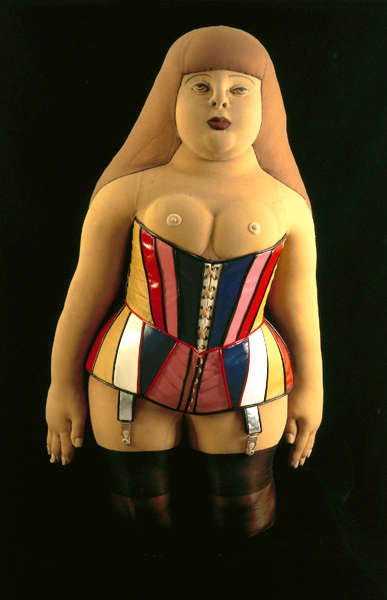
"Lindner Doll" (1965) by Jann Haworth

During the 1960s, Jann Haworth (1942) experimented with a series of cloth work 'celebrity' dolls in which she captured the spirit of the 'swinging sixties' and Pop Art. Alongside Richard Hamilton, David Hockney and her husband Peter Blake, Haworth was a major figure in the first decade of British Pop Art, exploring the imagery of comics, pin-up magazines, consumer advertisements. Two of her cloth work sculptures of this period appear in the foreground of the Beatles' Sgt. Pepper's Lonely Hearts Club Band album cover, a photo-collage which she co-designed with Peter Blake. She explained in an interview with David Lister:

Peter and I were there at the time, talking to Paul and John, and working out what the Pepper cover would be... The old lady and Shirley Temple figure in the foreground were mine, and the idea of going for 3-D figures in a setting was something I was doing at the time. The crowd concept was Peter's. (London, 2000)

The Lindner Doll, clad in her raucous, breast exposing corset, is a play upon the bizarre images of women found in the work of the American Pop Artist Richard Lindner. Jann Haworth continued to work in three dimensional needlework and appliqué throughout the following decade, when she worked with The Brotherhood of Ruralists. Haworth left the Brotherhood around 1980 and returned to the United States, where in Utah, she founded the Sundance Artshack Studio. (source)

It's for sale for £30,000 (56K USD).