Monday, December 04, 2006

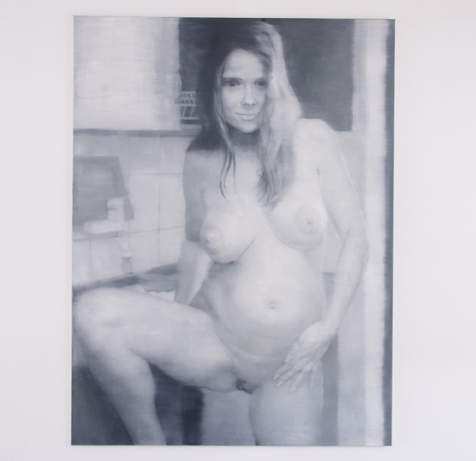
"Femme aux Chrysanthemes" (1942) by Francis Picabia

During World War II, Francis Picabia (1879 - 1953) painted images of starlets, nudes and fashionable women that he found in popular magazines and, in particular, erotic magazines of the 1930s. Picabia faithfully copied these images of women altering little from the original photographs. Signs of the photographic origins of his paintings - the harsh artificial lighting and snap-shot effects - were left deliberately obvious. Moreover, Picabia frequently chose images in which the female anatomy was distorted by sharp camera angles which he left uncorrected in his painted versions. He also seductively translated black and white images into color of his own choosing underscoring his fascination with the colors and textures of the female body. However, in spite of the fact that the women he chose often existed in a realm of stereotypical poses and cheap eroticism, Picabia’s paintings of women in the 1940s demonstrate his interest in the fundamental differences between the genres of painting and photography. Each image selected and copied is implicated into this dialogue.

Please note the quite modern-looking Full-Brazilian.

sources: image | text

The Killers' "Sam's Town" (2006) by Anton Corbijn [update]

There was one tag missing on on Artboobs: music! Here's the first (updated) instalment of "album covers featuring boobs": "Sam's Town" (2006) by The Killers with a photo by Dutch photographer Anton Corbijn. More suggestions are highly appreciated.

From a review of the album in a UK music magazine (I've forgotten which one):

As well as a desert bighorn sheep - the Nevada state animal - the album cover has a disconsolate beauty queen leaning against a battered trailer. Corbijn considered hiring a model but then chose Felice, the Puerto Rican-American receptionist at the recording studio.

Amazon review by Aidin Vaziri:

The Killers five-million-selling debut, 2004's Hot Fuss, saw the stylish Las Vegas quartet mining inspiration from its favorite '80s British acts Duran Duran, the Cure, and the Smiths. On its follow-up, the group turns its focus homeward. First there's the album title, Sam's Town, which pays tribute to the old-school local casino where the band got its start. Then there's the music inside, a collection of windswept rockers in the vein of Bruce Springsteen that leave the indie-disco vibe of "Mr. Brightside" in the desert dust. Working with producers Alan Moulder and Flood (best known for their work with U2, Depeche Mode and Nine Inch Nails), everything here sounds bigger and shinier, with full-blown strings and choirs coloring epics like "When You Were Young" and "The River Is Wild." Coming soon to a stadium near you. --Aidin Vaziri

(updated 2006-12-04)

Wednesday, November 29, 2006

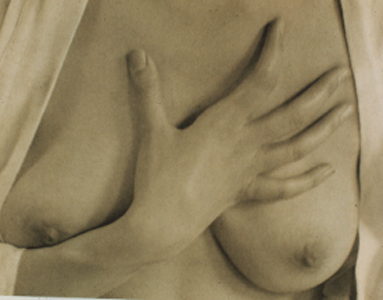
"Georgia O'Keeffe" (1919) by Alfred Stieglitz

Alfred Stieglitz (1864–1946) was an American-born photographer who was instrumental over his fifty-year career in making photography an acceptable art form alongside painting and sculpture. Many of his photographs are known for appearing like those other art forms, and he is also known for his marriage to painter Georgia O'Keeffe.

Stieglitz divorced his first wife in 1918, soon after she threw him out of their house when she came home and found him photographing Georgia O'Keeffe, whom he moved in with shortly thereafter. The two married in 1924.

Stieglitz' nudes are often considered the first photographs to recognize the artistic potential of isolated parts of the human body.

source: photo | text

Tuesday, November 28, 2006

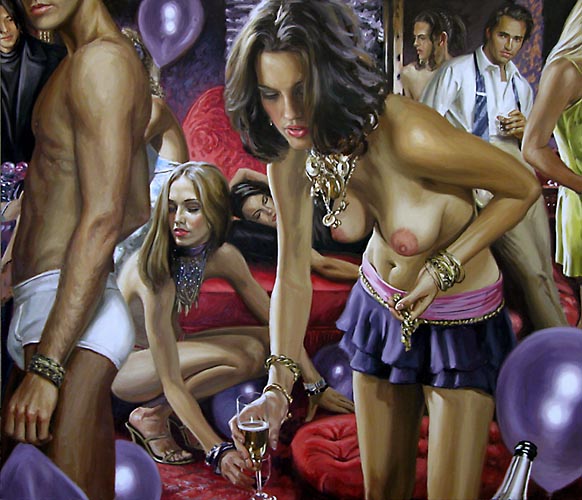
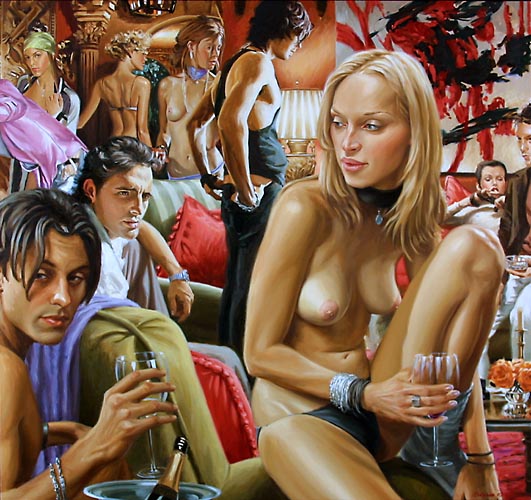
Four paintings by Terry Rodgers

"Approximations of Immortality" (2003) by Terry Rodgers, 48" x 56", oil on linen
"The Triumph of Venus" (2005) by Terry Rodgers, 63" x 96", oil on linen
"The Vortex" (2003) by Terry Rodgers, 62" x 66", oil on linen

Homework for the art students out there: compare the classic "The Triumph of Venus" by Alessandro Magnasco with the painting with the same title above. Please post your essays in the comments.

Terry Rodgers is an internationally recognized artist who has worked and lived in Massachusetts, Washington, DC, and Ohio. He has had solo exhibitions in Amsterdam and Milan, and participated in group shows around the world. In the United States he has had solo exhibitions in New York, Los Angeles, Atlanta, and Chicago. He has been featured in numerous publications in America and abroad including Die Welt, Art in America, Citizen K, German GQ, and FLAUNT to name a few.

Rodgers' current work focuses on the life of upper middle class, seemingly adrift in affluence and casualness, unsatisfied and disconnected. These paintings are not snapshots or slices of life, not verite records of actual party situations or family scenes, nor are they diaristic records of his life, but carefully constructed and composited fictions, designed to elicit the most meaning and sustain the maximum amount of ambiguity.

Terry Rodgers attended Amherst College, with a major in Fine Arts. His strong interest in film and photography influenced his style in the direction of representational realism in art. He spends summers each year in Southern France painting from life and photographically capturing the gestures, faces, and figures that inhabit the 21st Century milieu that he depicts in his paintings.

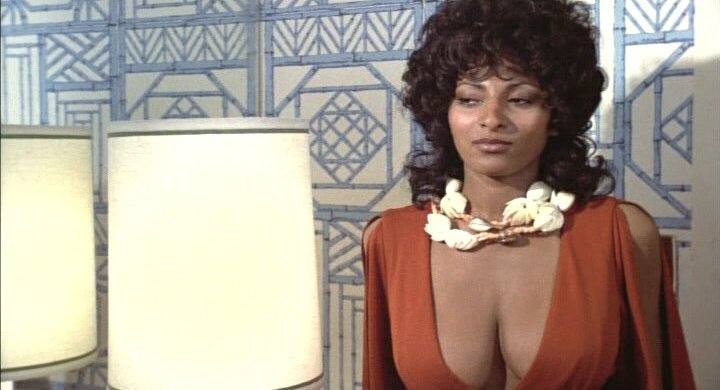
Actress Pam Grier (1949)

Another fan writes: "Pam Grier is ultra cool. Always calm and well articulated, with a remarkably positive philosophy of life. Even before I even knew her name, I considered myself a fan. She paved the way to a new generation of actresses that could held their own in an action picture in a fearless manner, all the while remaining feminine and sexy. Furthermore, if I may share a somewhat macho observation, she has the honor of having one of the most beautiful chest ever displayed in the history of motion pictures."

Pam Grier at the IMDB and at amazon.com.

"Untitled (Brown Flower Bed)" (2005) by Suzannah Sinclair

Suzannah Sinclair makes sensual, autobiographical 70s-style paintings. Many of her female figures are lifted from 1960 Playboys and combined with rainbow patterns reminiscent of 1970's disco, wallpaper motifs. Her work is painted on wood stained panels and at times contain a vapid painful yet sensual emotion.

With these new works, Ms. Sinclair's stripes and rainbows find form in the vintage textiles of bedsheets and fashions. The motifs and figures give an uncompromisingly sensual and painful feel. We are lost in the the innocent want, the self and/or the other.

With this disconnection, be it real loss or lust, there is an anticipation of many possibilities. Much sadness and boredom pervade the figures, but the suggestive poses and their delicate rendering suggest a serious beauty, as if everything is just peachy. Vapid melancholia and dull depression can be romantic. Rest, violence and death are lewdly implied.

(source)

Two drawings by Hiroshi Kaieda

Two drawings by illustration artist Hiroshi Kaieda (1972, Japan)

From an interview:

Q3: What are the best characteristics of your drawing?
A3: There is no warmth.

Q9: Where do you get your inspirations from? (Example: from books, TV, etc)
A9: From word and gesture of people, and from music and movie.

Q12: Do you like any animals?
A12: Human and dog. I love them.

Q14: How do you spend your weekends?
A14: Sleep, day dream and date.

via here and here

Saturday, November 25, 2006

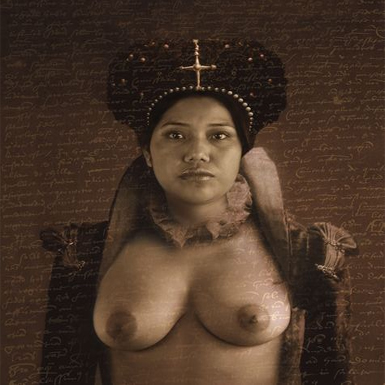
Photo by Veronica Riedel

Veronica Riedel (Guatemala, 1961) studied Journalism and Fine Arts at the University of Colombia, South Carolina. She obtained her Bachelor of Fine Arts degree in Photography and Cinematography at the University of Miami, Coral Gables, Florida and took various courses at UCLA, California, and the Anderson Ranch Arts Center in Colorado. Specializing in photography, Riedel portrays indigenous people of the Americas reflecting on the consequences of European conquest. She has had numerous one-person and group exhibitions throughout Latin America and the United States.

Photo courtesy Arte Al Limite

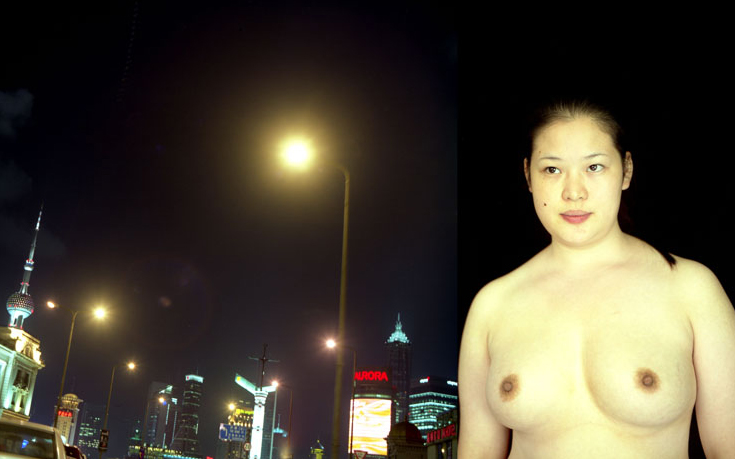
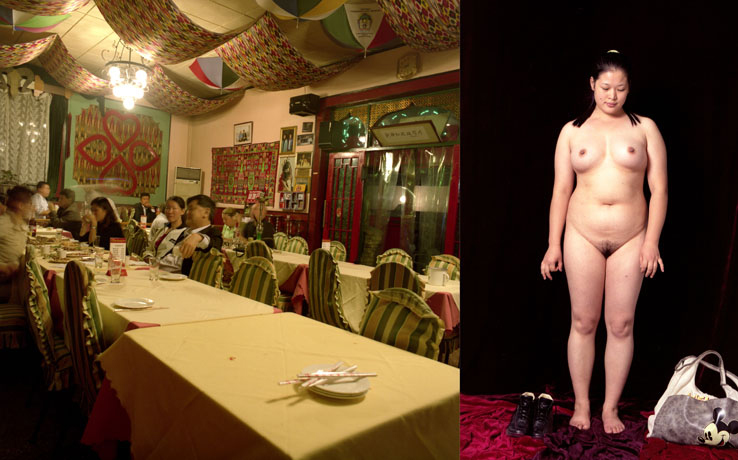
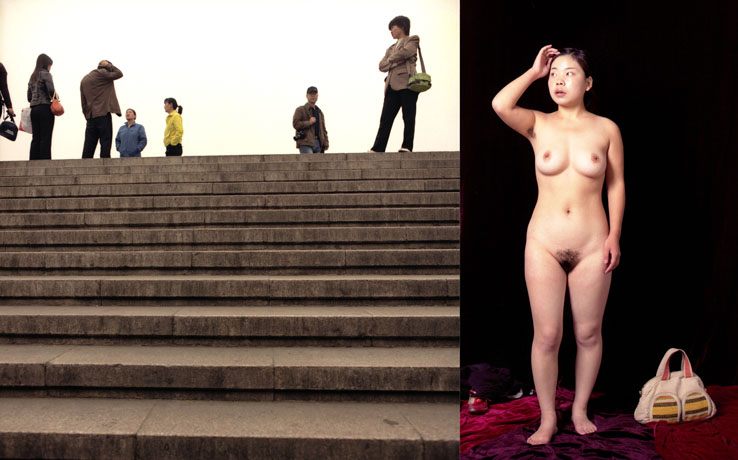
Three photos from "China Naked" by Frank Rothe

I love the way the girls' handbags and shoes are in the picture.

Frank Rothe: "For those that know my artist work they also know that I'm not the one who is interested in nude photography. But this work shows human beings naked and no erotic shots."

Over the last decade Frank Rothe (Germany, 1972) has been shooting and exhibiting internationally. He has worked on campaigns and as a staff photographer for international and national publications, including, Amica Italy, Stern, Die Zeit, Marie Claire USA, Esquire, Playboy, Guliver and many more. His work has been exhibited in Galeria Athos Bulcao Brazil, Goethe Institute Johannesburg in South Africa, Prague House of Photography in Czech Republic, Center of Contemporary Arts in the USA and other Galleries throughout the world and Germany.

Thursday, November 23, 2006

"Hell is Others (Richter)" by Roman Wolgin

Roman Wolgin (Moscow, 1978) lives and works in Berlin. His father was a Soviet State painter before becoming an Orthodox priest after the fall of the USSR. Roman graduated from the Rijksakademie in Amsterdam. He recently had solo exhibitions at Diana Stigter Galerie, Amsterdam and STORE, London,